2025-06-03
My adult daughter and I have had the good fortune to travel extensively over the past decade since my retirement.
When asked which adventure is my favorite, I cannot choose. Each is singularly outstanding and cherished, from hiking in New Zealand to tracking leopards in Africa to snorkeling with seals in the Galapagos.
But 2024 was particularly extraordinary. Within seven months, we were at the furthest edges of Earth on our first polar expeditions, to the Arctic, then to Antarctica.
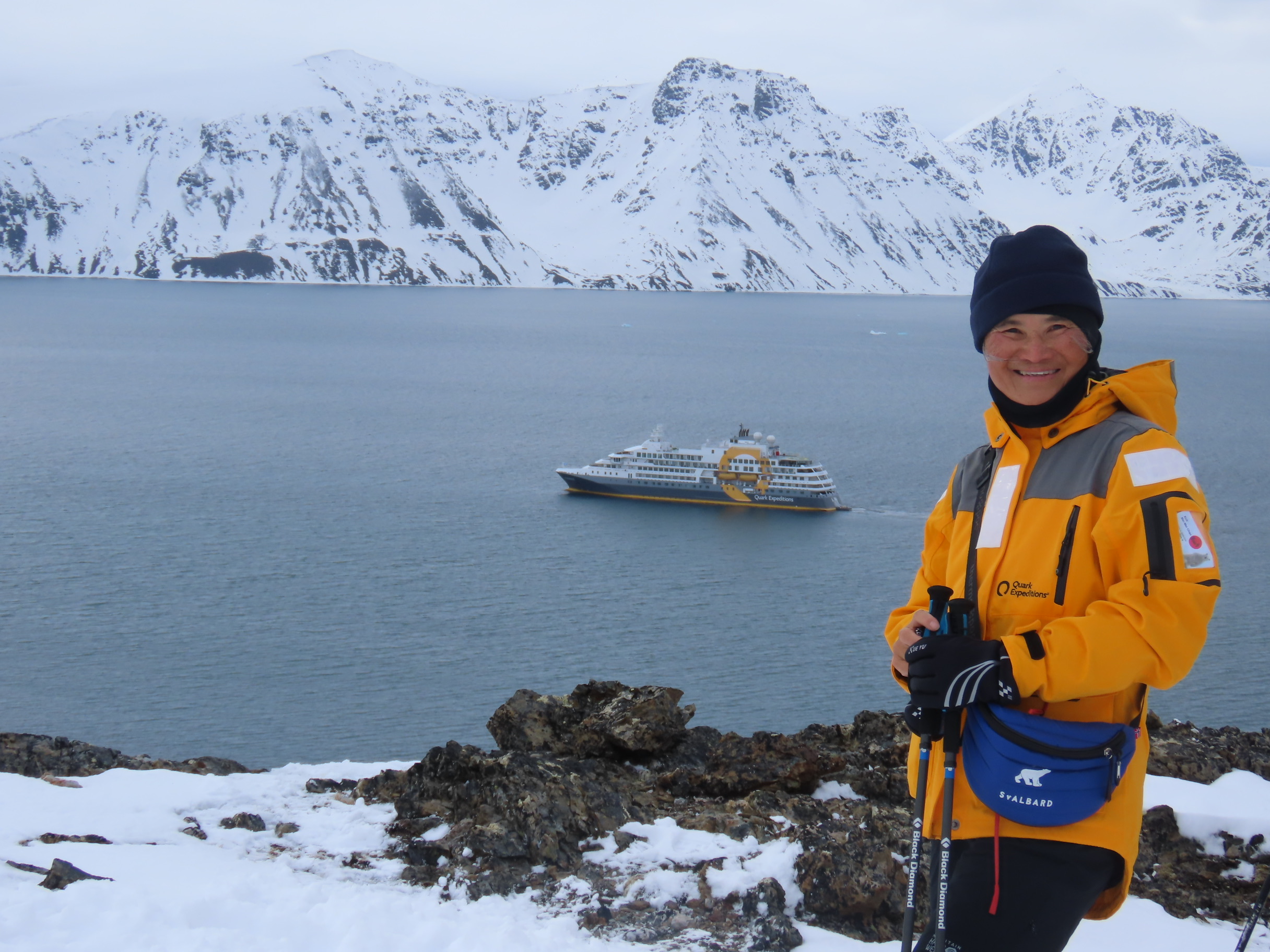
From May 11-23, Regan and I cruised around Svalbard, Norway, well above the Arctic Circle , aboard Quark’s Ultramarine. (Click here for our Arctic report.)
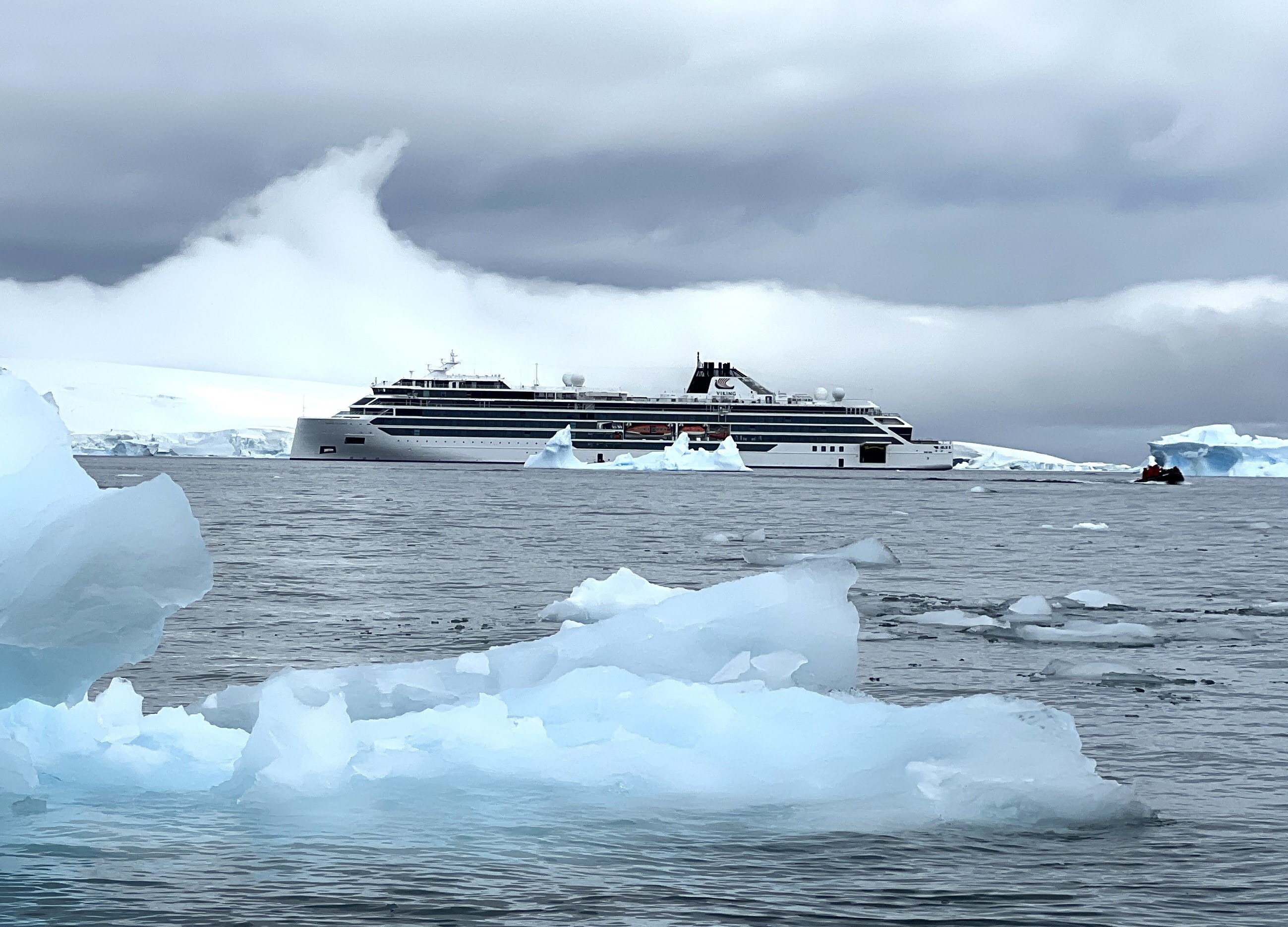
From Dec. 16 to Jan. 1, 2025, we cruised around the Falklands, South Georgia and Antarctica aboard Viking’s Octantis. (Click here for our Antarctica report.)
Both featured magnificent ancient glaciers, towering snow-clad mountains, crackling sea ice, crystal waters, and wildlife thriving remarkably amid the harsh landscapes, largely unconcerned with us humans. With no pollution, lights or crowds, the sense of serene solitude was profound.
I would say these were once-in-a-lifetime trips…except we’re already planning a return. The polar regions completely captured our imaginations and hearts.
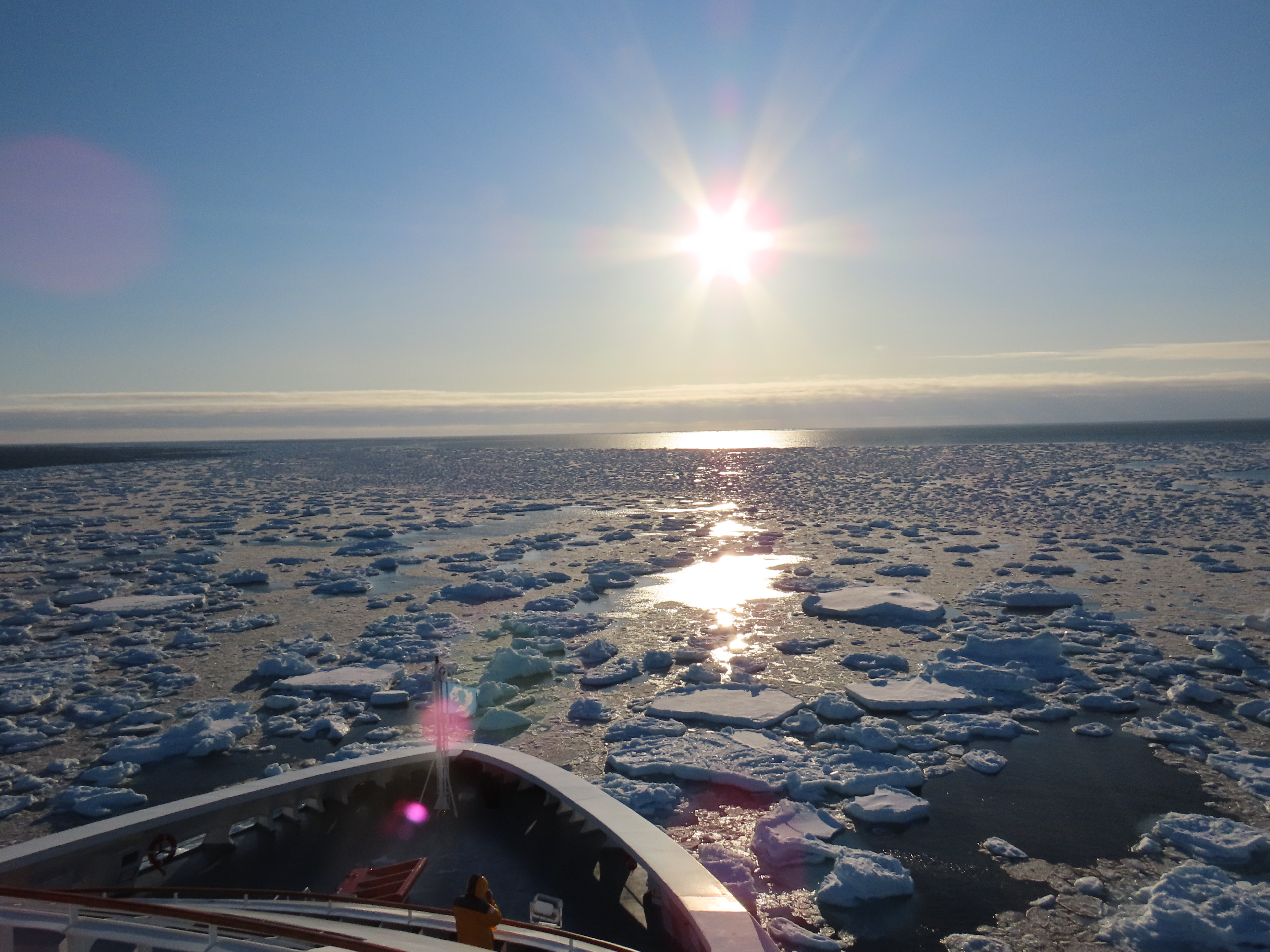
Around midnight on May 15, 2024, under the bright midnight sun, the Ultramarine was in the midst of Arctic packed ice, at 80 degrees north or at the 80th parallel north of the equator. We were the only ship this far north, just 635 miles from the North Pole. It was bitterly cold at 17 degrees with 25 mph winds. But we were jubilant at being at the top of the world, imagining carving through the ice, going straight on till morning.
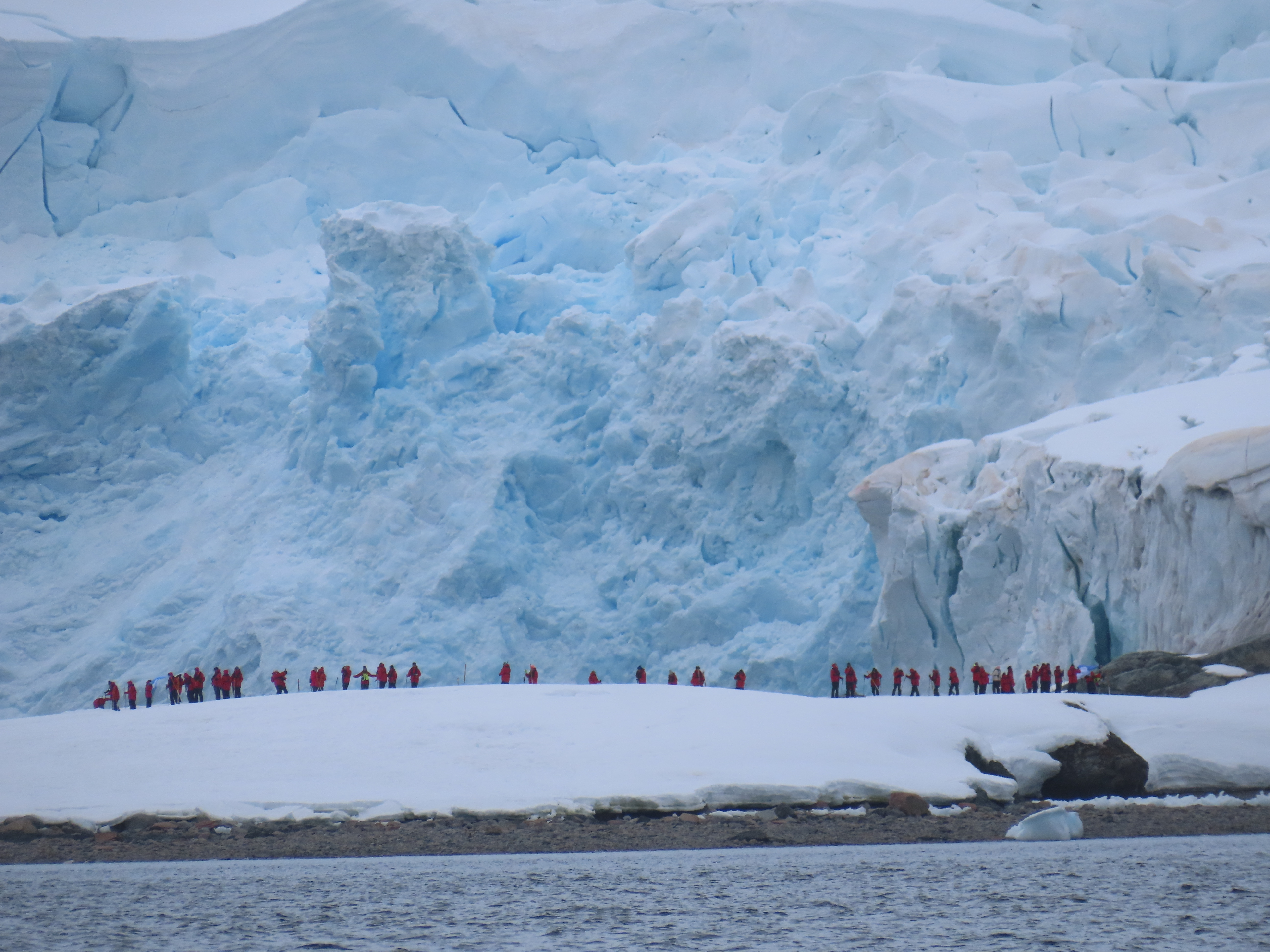
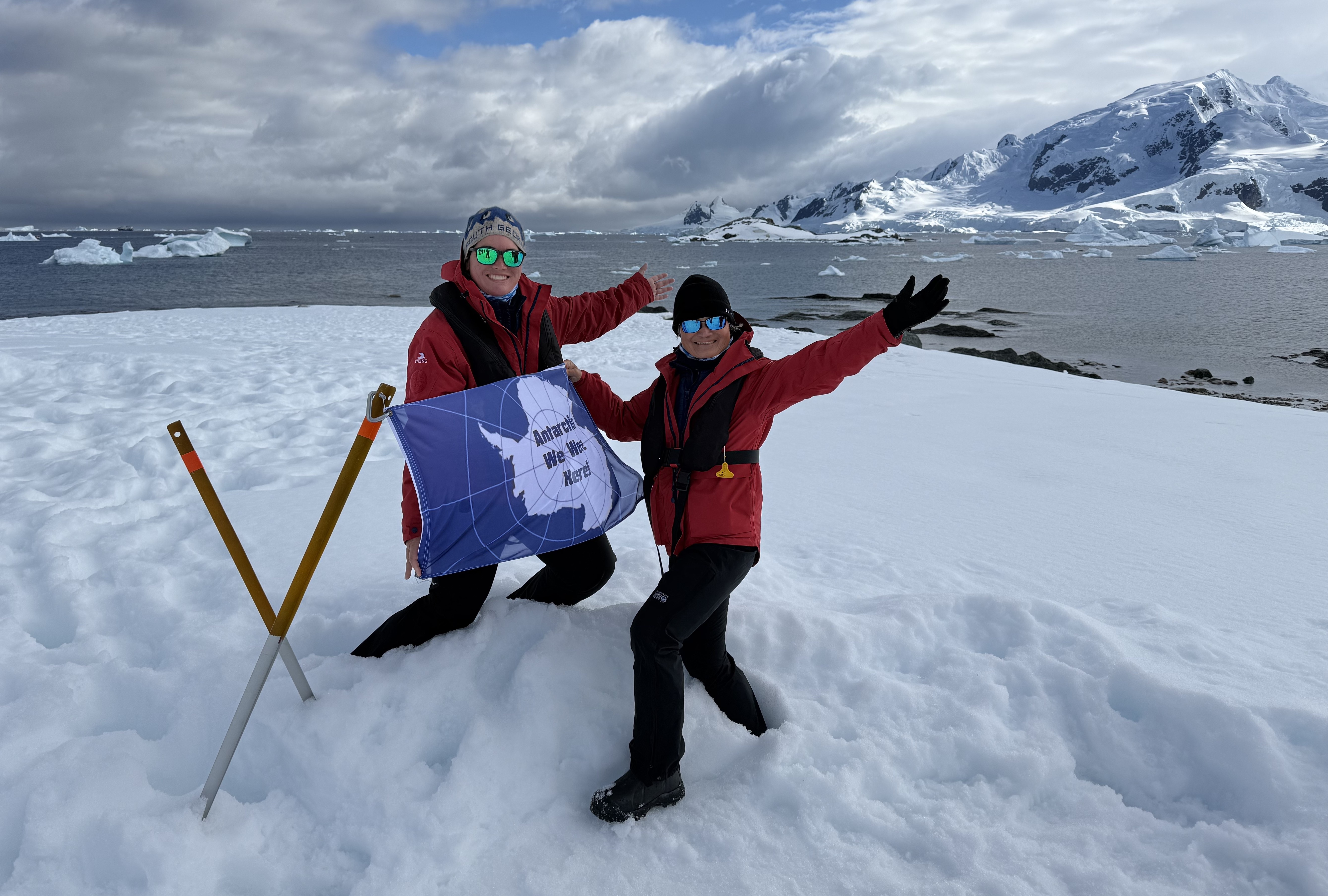
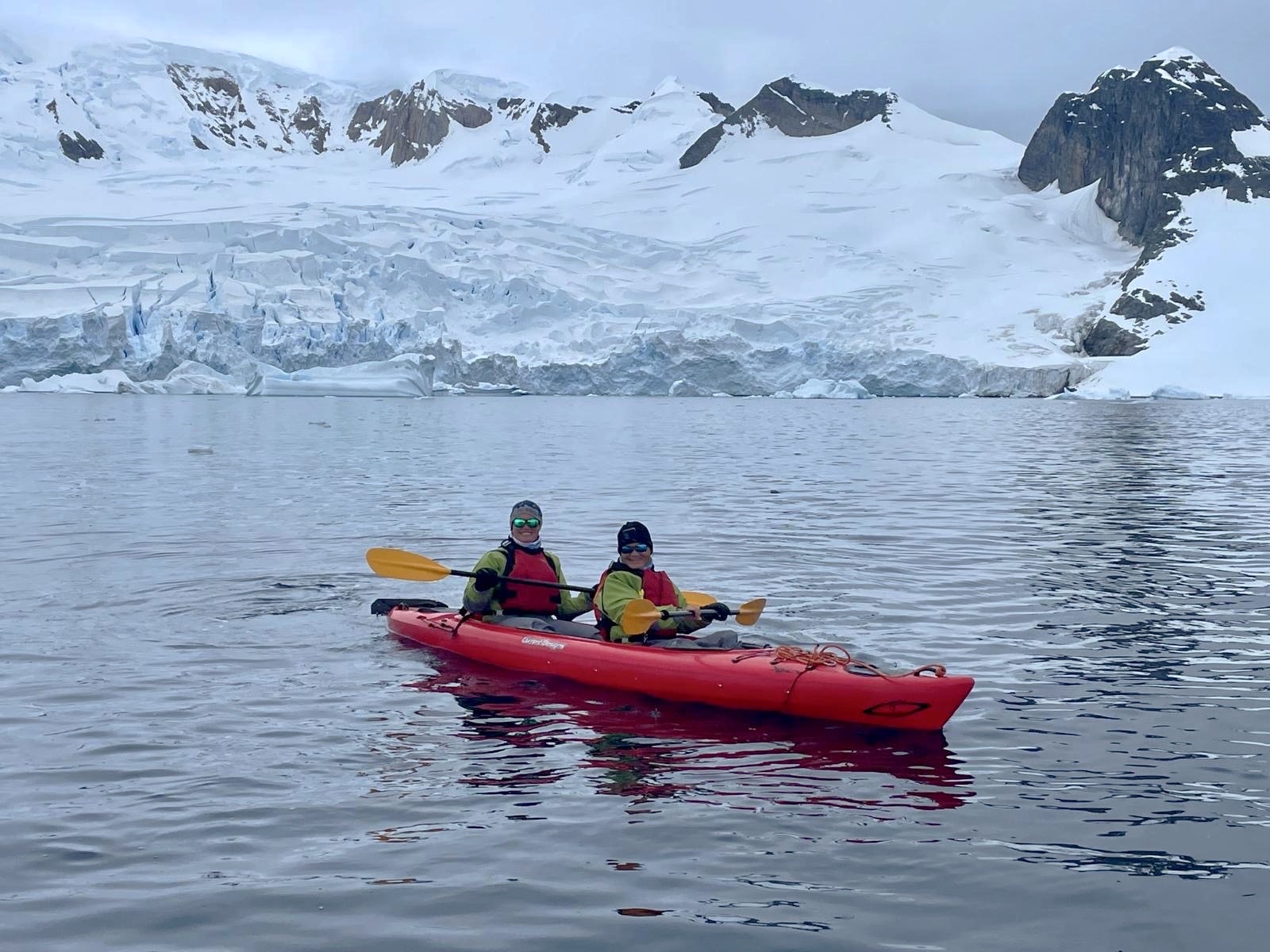
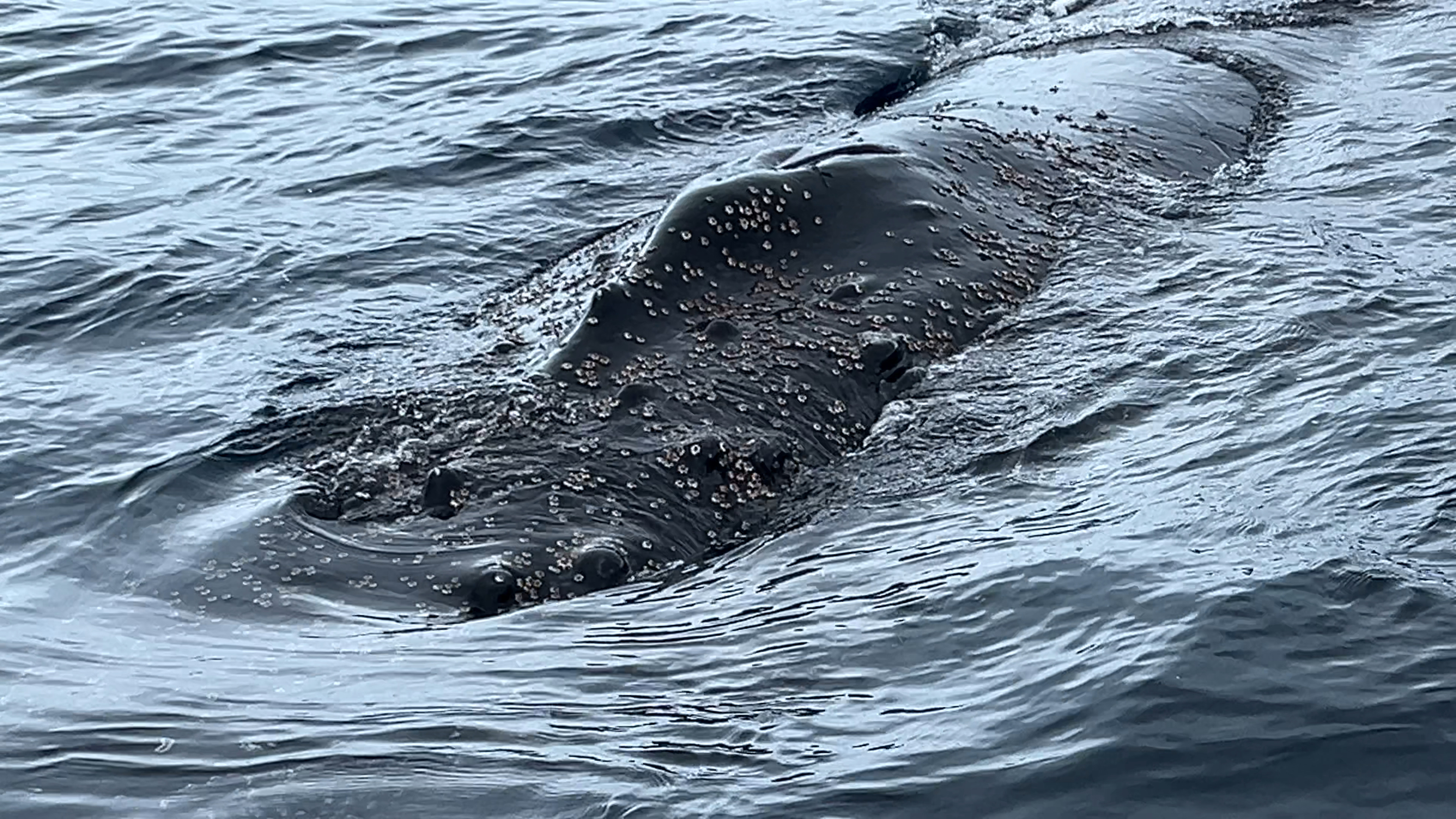
On Dec. 30, 2024, we were 12,000 miles away on the opposite end of the world, at 64 degrees south. Greeted by gentoo penguins, shimmering blue icebergs and snowy mountains at Recess Cove, Charlotte Bay, Antarctica, we gleefully strolled on the 7th continent, becoming members of an exclusive club. Only 79,000 tourists landed on Antarctica last season—and Charlotte Bay is not among the top 20 landed sites. Later the same day, our last day, we were ecstatic as humpback whales surrounded us while we were kayaking and riding in one of Octantis' special operations boats.
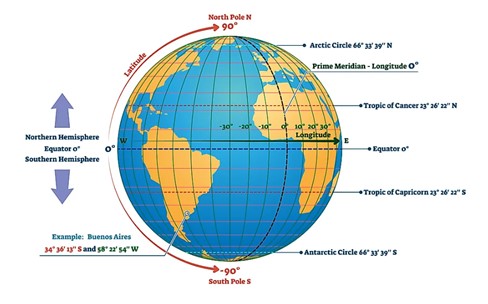
For perspective, we were about 1,000 miles north of the Arctic Circle and 635 miles south of the North Pole, and about 200 miles north of the Antarctic Circle and 2,000 miles north of the South Pole.
How long had we been planning this unique triumph? Um, months.
As I neared 65, I only had a few items left on my bucket list. One was to see polar bears in the wild. And where’s that? Parts of Canada, Greenland and Russia; Kaktovik, Alaska (off limits for now), and Norway. The two areas where polar bears are most concentrated are in Churchill, Canada, and Svalbard, Norway, an archipelago just 800 miles from the North Pole.
In March, we happened upon discounts for a Quark expedition to Spitsbergen, the largest island in Svalbard. We had never been on an expedition but were drawn by Quark's expertise: "Polar-obsessed since 1991" is their motto. Just do it, my husband said, or you’ll just keep thinking about doing it. We booked on April 3, a month before the cruise. If you know me, you know this was very unusual as I typically plan years ahead!
As Floridians, we anticipated being very cold. After examining our hiking gear, we bought more merino layers, socks, gloves and ski goggles. To complement our beloved pocket-size Canon sx740 with 40x optical zoom, we bought the Canon sx70 with a fabulous 65x optical zoom, which was our best investment for this trip. (And, we ended up buying lots more merino wool on location.)
After unexpected hiccups too complicated to recount here, we boarded the beautiful Ultramarine May 11 in Longyearbyen, Norway. It’s the northernmost inhabited town in the world, on the island of Spitsbergen. About a third of our fellow passengers were lugging enormous fancy cameras, a third were repeat Quark guests, and a third had been to Antarctica. “It’s completely different,” they told us.
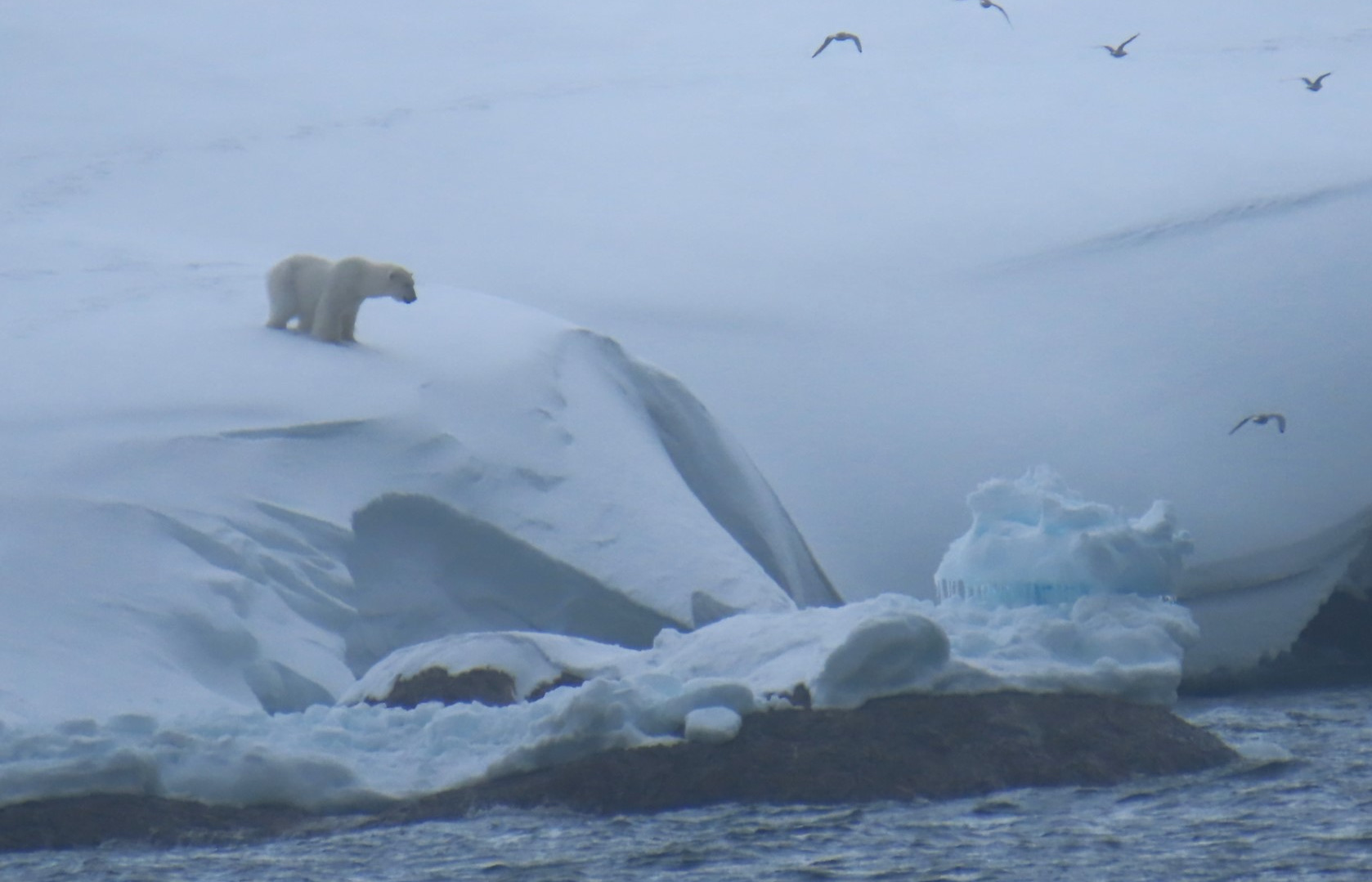
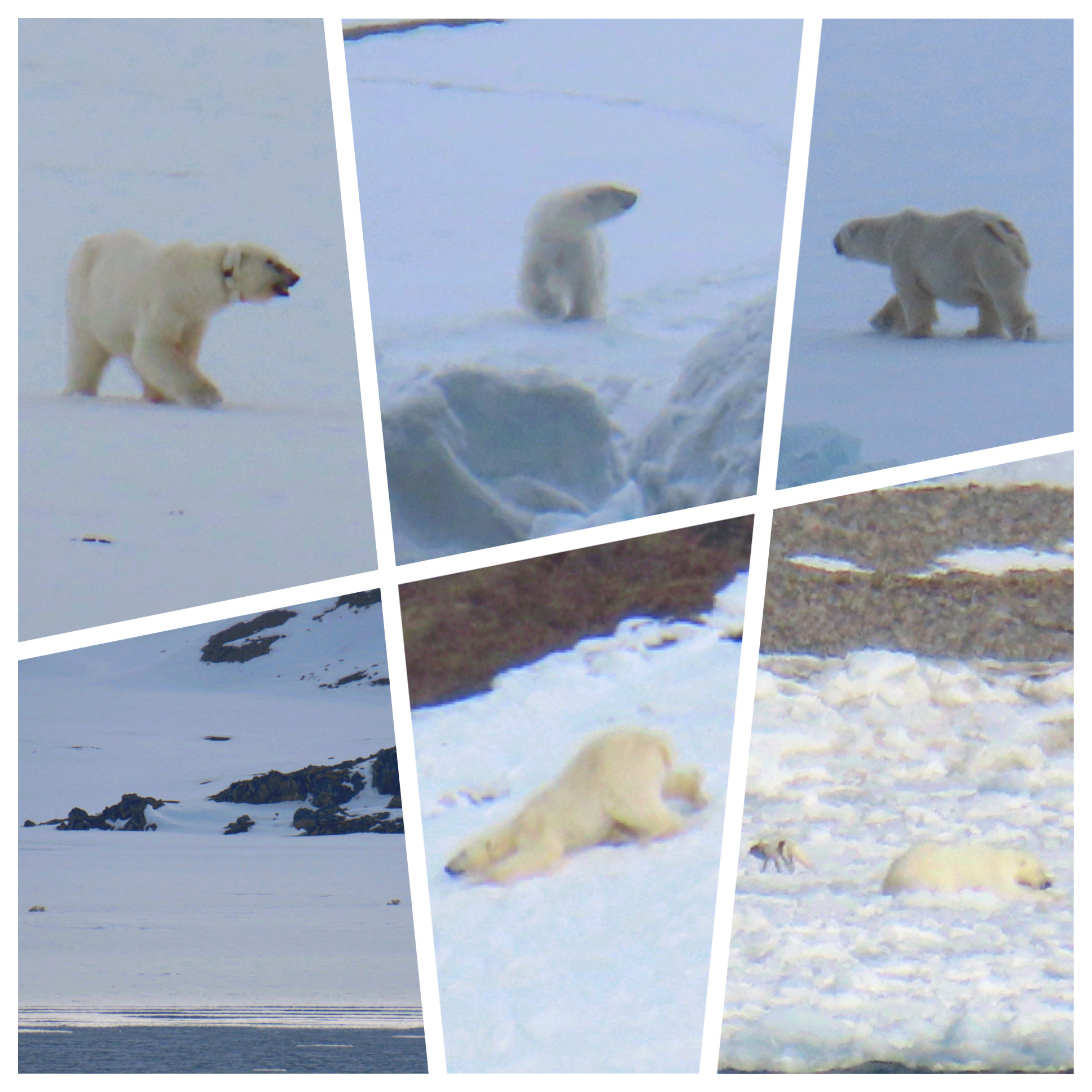
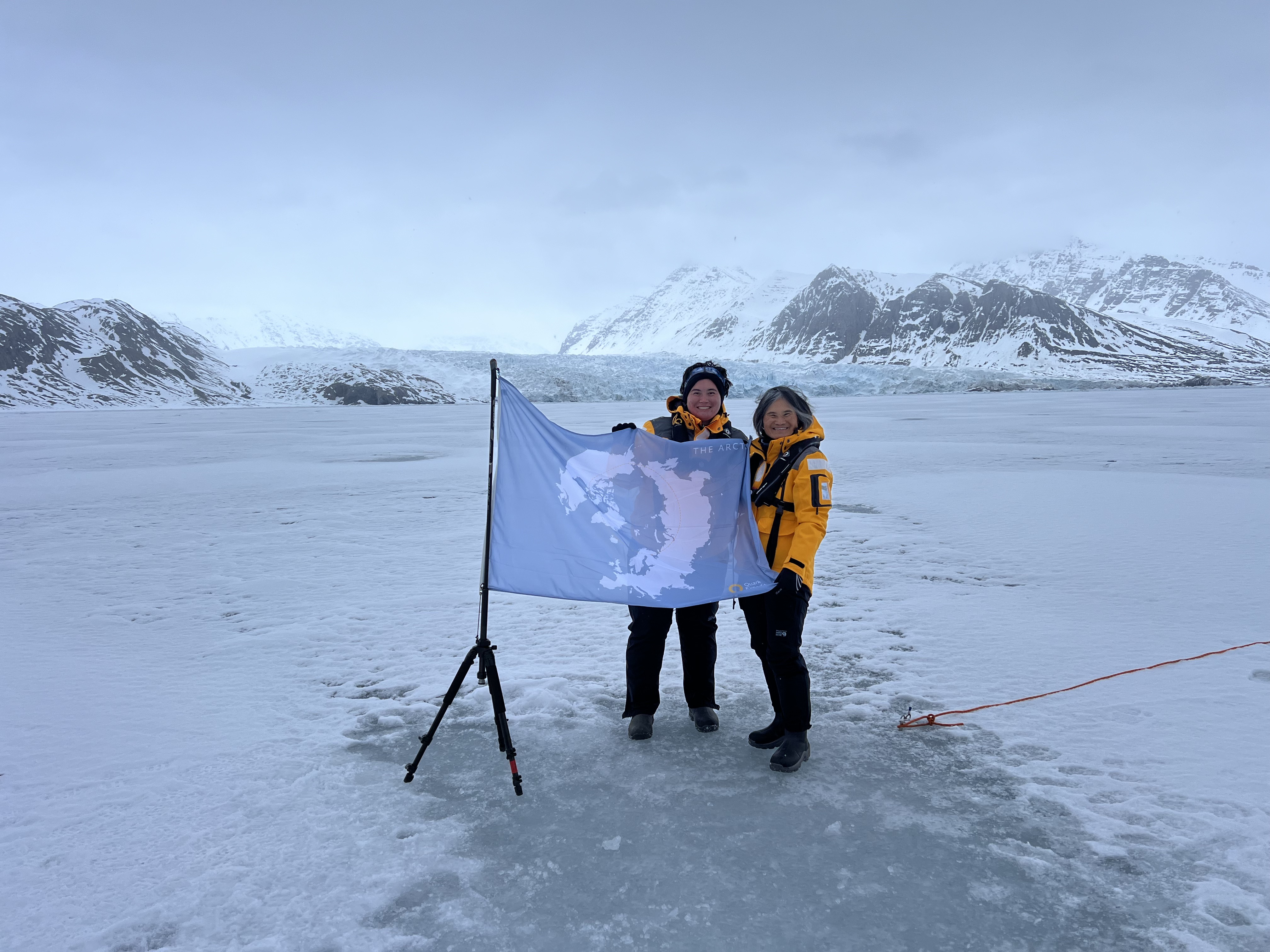
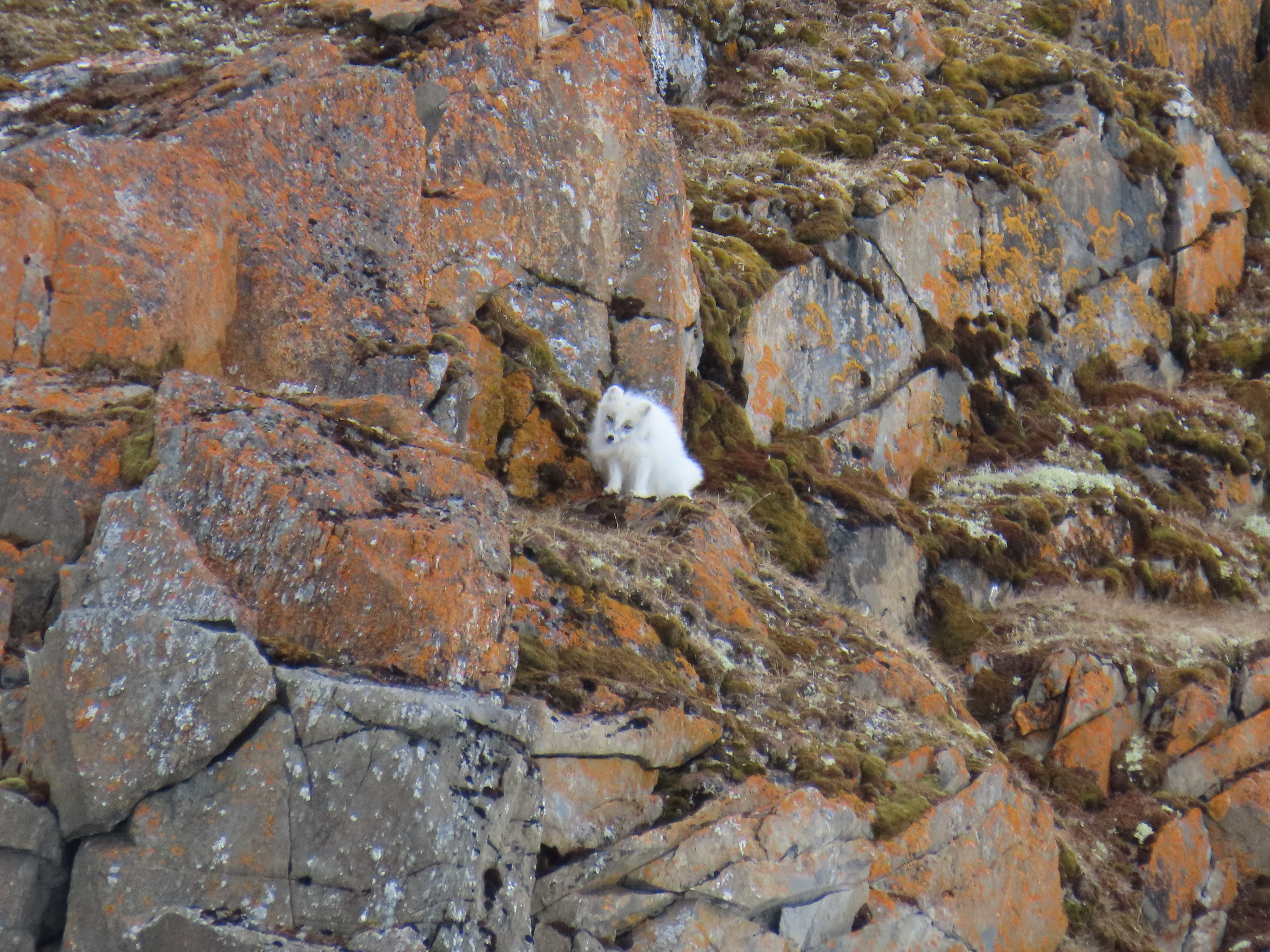
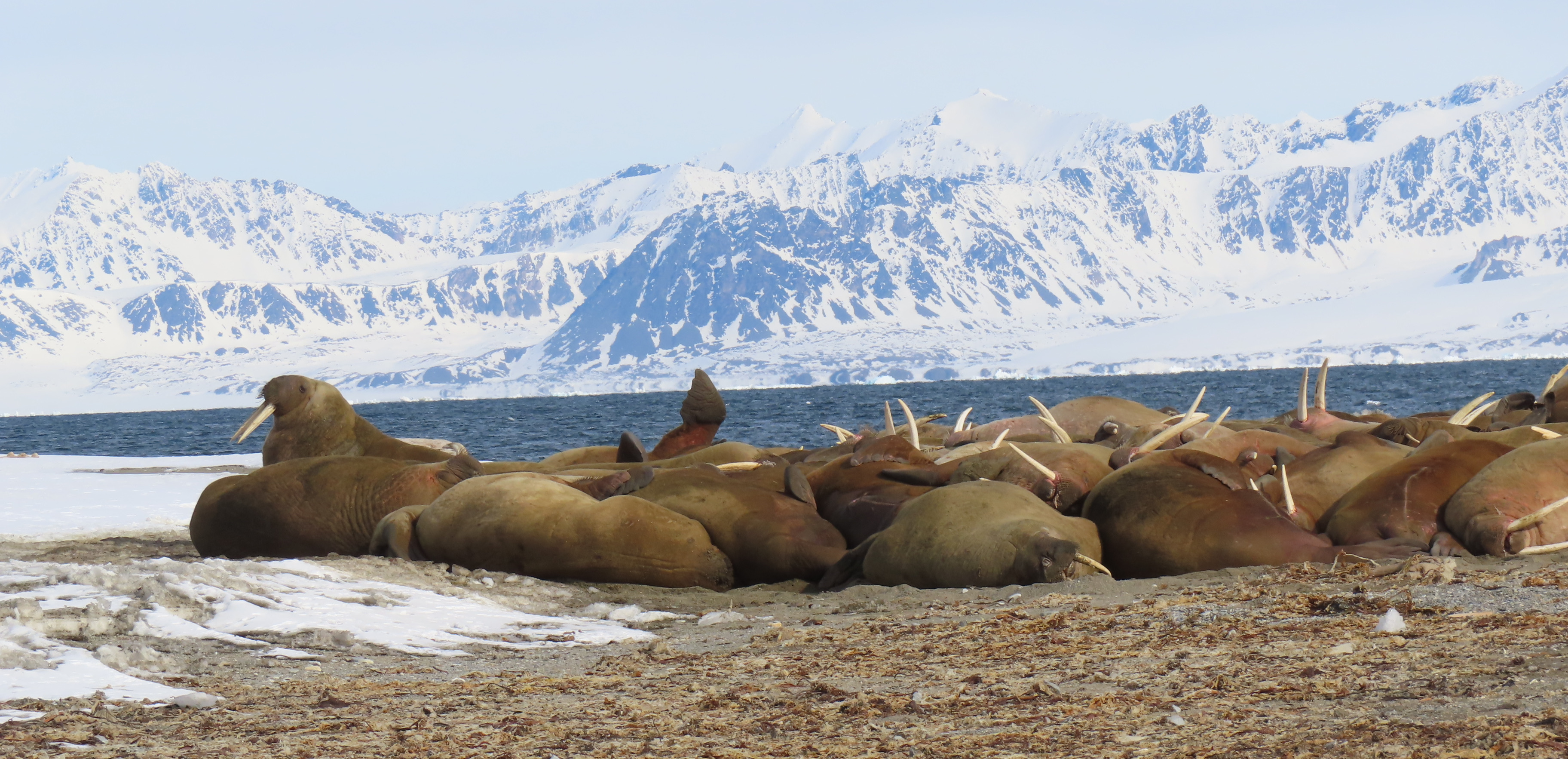
Over 12 days, we saw seven polar bears, oodles of walruses, four Arctic foxes, some seals, a large pod of beluga whales, herds of reindeer, and seabirds galore including puffins. We walked on frozen sea ice (called “fast ice” because it is still “fastened” to shore) in front of an ancient glacier and sailed north until we hit the Arctic pack ice.
We came home glowing, not just from the cold, and wondering (now that we have all this winter garb): how and when can we get to Antarctica?
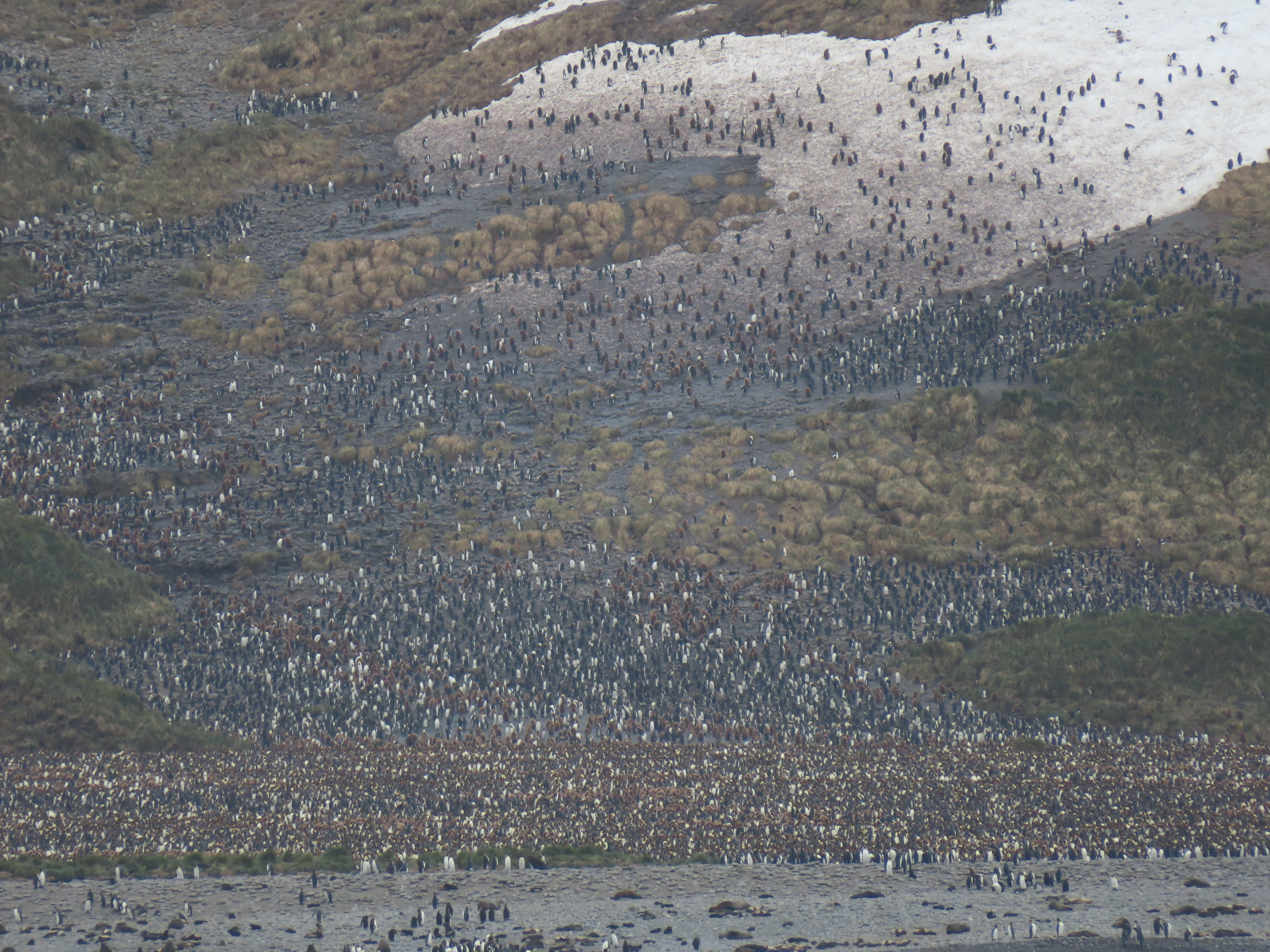
After thorough research, we decided the Falklands and South Georgia were top priorities due to the immensity of wildlife there. During the height of the breeding season in November/December, South Georgia is said to have more wildlife per square foot than any other place on the planet with some 7-8 million penguins and 5 million fur seals. (While Antarctica has more penguins overall, nearly 12 million, only about 6 million are in the peninsula, where most travelers go.)
Itineraries with those sub-Antarctic islands are less frequent and take longer than the standard Antarctica cruise. So we expected to wait several years or more for our next polar adventure. I proceeded to book a return trip to Argentina for hiking during Regan’s December break.
Four months later, I again came across a discounted fare: Viking’s Octantis to the Falklands, South Georgia and Antarctica, embarking Dec. 16, 2024, for 18 days.
I’ve been on a Viking ocean cruise and loved the luxurious pampering. But for an expedition, Viking wasn’t our first choice: its polar expertise began in 2022, and its two ships carry up to 378 passengers, twice that of other vessels.
However, this itinerary was perfect, fitting into our Argentina hiking calendar.
“So, here’s the thing,” I said to Regan. “We could go hiking, again.
Or, we could go to Antarctica.”
We booked on Sept. 19—again, very unlike me! We now had an ample supply of polar gear and we knew Viking would provide "free" jackets to keep as Quark did. Our best investment this time were fuzzy slip-on mini-boots with great tread, which we wore almost continuously on the elegant Octantis.
We knew Viking would offer incredible food and service (and it did!). But we worried we wouldn’t see whales (too early in the season), wouldn’t get on land much (too many passengers), would have our trip curtailed by weather or other issues, would be pummeled by the dreaded Drake Passage from Antarctica to Ushuaia.
And we were resigned to again miss out on polar kayaking (too many passengers). Quark held a lottery for 10 kayak spots for the entire Arctic sailing and we, sadly, were among 40 guests not chosen.
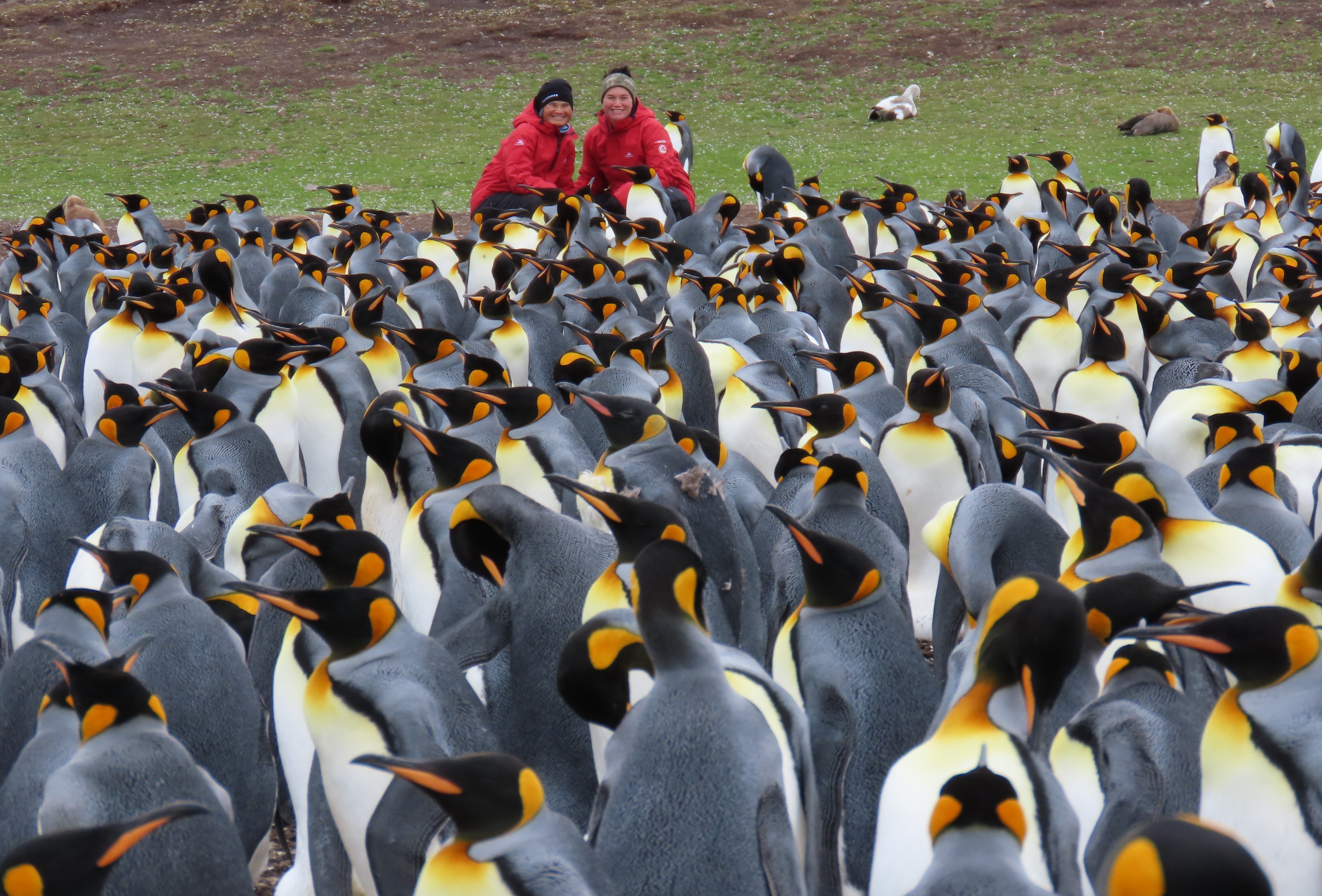
The Viking voyage far exceeded our expectations! Despite some weather impacts early on, the Octantis had expedition activities on eight days, and the weather, views and wildlife got better and better. Our first encounters with penguins in the Falklands and South Georgia were among the most amazing experiences we've ever had.
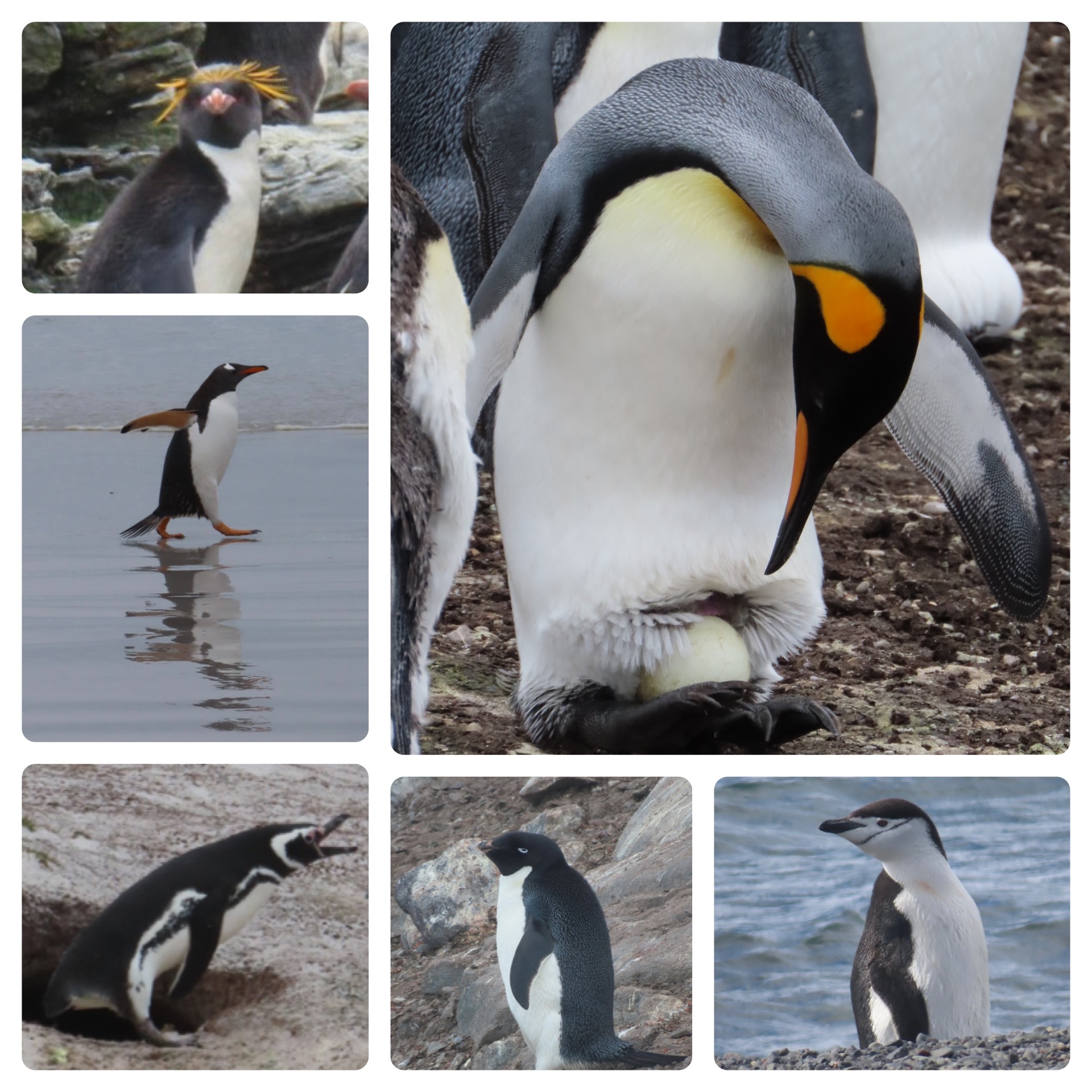
In all, we saw six types of penguins (king, gentoos, macaroni, chinstrap, Adelie and Magellanic); oodles of seabirds including albatrosses; four types of seals (fur, elephant, Weddell and crabeater); and three types of whales (so many humpback, some fin, and a few orca, briefly).
We got to admire the world’s largest iceberg, A23A, for hours; rammed the ship into sea/fast ice not once, but twice; and kayaked five glorious times, including being the first to do so in a glacial lake that had been frozen until now. On our last and best day, we strolled on the white continent at Recess Cove.
I have been reliving our journey every day since our return, with appreciation, and longing.
These pristine wonderlands at the ends of the world are calling more and more adventurers. In the Svalbard archipelago, there were 71 expedition ships in 2023, when nearly 90,000 explorers went ashore. In Antarctica, there were 82 polar vessels last season when nearly 79,000 people made landings.
Because their summer tourist seasons are polar opposite each other, you can visit both in one year, as we did!
As a Fora travel advisor, I would love to get you on a polar expedition! Click here to connect!
Here’s how the Arctic and the Antarctic compare, in our view.
Getting there
In a nutshell: The best way to explore these regions is aboard expedition ships sailing from far north or south.
The Arctic is an ocean, encompassing everything north of the Arctic circle (66.5° north), and includes parts of Alaska, Canada, Greenland, Russia, and Scandinavia. We embarked at Longyearbyen, Norway, the northernmost inhabited town in the world, on the island of Spitsbergen in the Svalbard archipelago. We flew Orlando-Frankfurt-Oslo-Longyearbyen (roughly 22 hours in air). Tourist period: April-September.
The Antarctic is an ice-covered continent, covering everything south of the line of latitude at 60° south. Our cruise embarked at Ushuaia, Argentina, and included the Falklands and South Georgia. We flew Orlando-Panama City-Buenos Aires-Ushuaia (roughly 17 hours in air), then sailed two days to our first stop. Tourist period: October-March.
Expedition ships range in size from 8-500 passengers, from no-frills to ultra-luxury, with itineraries ranging from one to three weeks. Many of the top polar vessels travel to both the Arctic and Antarctica, with prices starting around $1000 per person per day.
Edge goes to: it’s a tie
Weather and seas
In a nutshell: Antarctica is colder because its average height is 7,500 feet, the highest of all continents. The Arctic is warmer because the sea ice stays at 28 degrees Fahrenheit.
During our travels, temperatures in both were around freezing, often accompanied by ferocious frigid winds. I was chilled to the bone a few times during our Arctic voyage but never that cold in Antarctica. We had many sunny days in the Arctic while Antarctica days were mostly overcast. It snowed a few times on both cruises.
The seas were largely smooth in the Arctic. The Antarctic was much rougher, starting with powerful waves in the South Atlantic from Ushuaia to the Falklands and continuing on and off through the Southern Ocean. But we got very lucky with an unusually calm Drake Passage on our way back to Ushuaia from Antarctica.
Edge goes to: the Arctic
Landscapes
In a nutshell: Both are otherworldly spectacular, immense, untouched, with amazing colors. Both are at risk from global warming, pollution, and commercial industry including mining, fishing, and shipping.
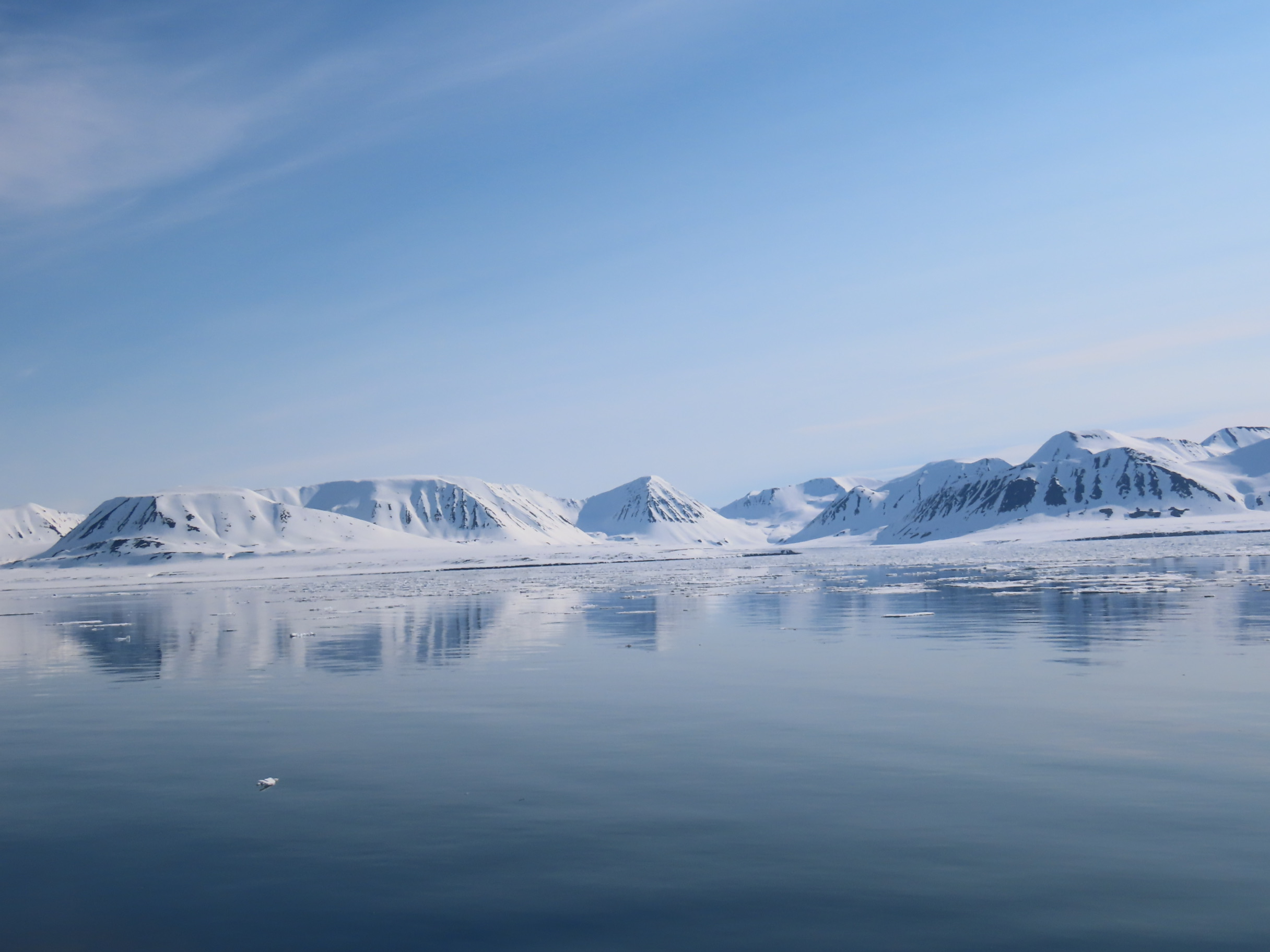
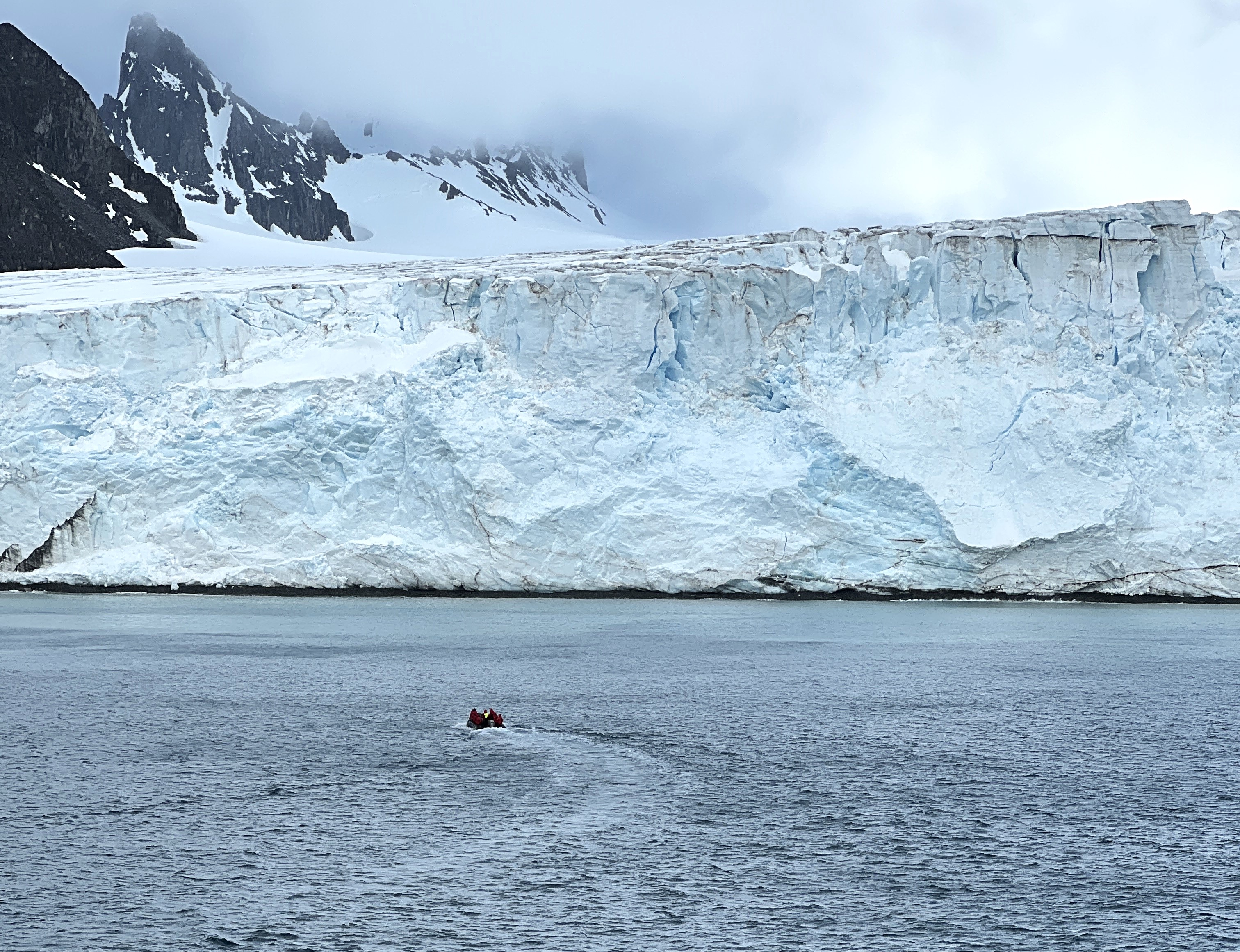
Antarctica is almost entirely covered in ice; it has uniquely humongous ice shelves and skyscraper-sized tabular icebergs.
Most of the ice in the Arctic is frozen sea, both seasonal and multi-year (however, Greenland's ice cap is the second largest in the world after Antarctica). The Arctic has more diversity with tundra, fjords and rolling hills, as well as more plant life and signs of history and civilization. It also had numerous ice sheets during our May journey.
Edge goes to: Antarctica
Wildlife
In a nutshell: Both have numerous birds and whales; the Arctic has 270 polar bears and Antarctica has nearly 12 million penguins.
The Arctic's numerous land animals including walrus, reindeer, fox, and seals. But its star attraction is the polar bear.
It’s not true there are more bears than people in Svalbard. There are about 270 polar bears vs. 2700 people in the archipelago, says the Norwegian Polar Institute, which conducted a census in 2015. The total of roughly 3,000 polar bears that’s often incorrectly cited is actually for the Barents Sea region, which includes Russia and the northern sea ice. Globally, there may be 26,000 polar bears. There hasn’t been a coordinated survey since 2004, when the count was 22,000 to 24,000.
Arctic explorers tend to be close knit, bound by a singular mission: to spot the elusive, solitary polar bear. Amid Svalbard’s 24,000 square miles (nearly the size of West Virginia) of snow and ice, it’s no easy task to find bears--some travelers never see any.
Cruising through fjords and around the craggy shores of Spitsbergen island, we saw seven “binocular bears” (bears in the distance; two were really just specks) and watched two for more than four hours. The hope was that one would stroll on ice toward our ship for a close encounter. Alas, this never happened.
Svalbard has long prohibited disturbing, luring or pursuing polar bears unnecessarily. This year, more stringent restrictions were enacted in national parks and reserves, including limiting commercial expedition ships to 200 passengers or fewer, prohibiting breaking fast ice, and limiting landings to 43 sites from May 26.
Of most significance for tourists on expedition ships are new distance requirements for polar bears (and walruses and birds). During the peak months of March 1-June 30, ships must stay 500 meters or one-third of a mile away from polar bears. If a bear approaches, tour operators are to retreat.
These rules apply to the 12 nautical miles around the Svalbard archipelago. On our cruise last May, some passengers were very irate because they expected to be much closer to the bears—and this was before the new regulations.
By comparison, Antarctica has no land animals (aside from an insect). But its unique balance of temperature, ice and food (krill mostly, and fish and squid) attract numerous birds and host huge penguin colonies, seals and whales. The only predators here are leopard seals and orcas so the wildlife is remarkably carefree. I was giddy with delight, turning this way and that, as around us exuberant penguins, seals and whales jumped and swam and ate and peered at us without fear.
Antarctica has about 5.8 million breeding pairs of penguins, the most anywhere. That includes its two exclusive penguins: about 240,000 Emperor breeding pairs (the largest penguin) and 4 million adelie breeding pairs, according to the 2020 State Of Antarctic Penguins Report (SOAP). In nearby South Georgia there are about 450,000 breeding pairs of king penguins along with 5 million fur seals.
And, Antarctica is a whale magnet: the Southern Ocean is the earth’s largest feeding ground for marine mammals, says the Antarctic and Southern Ocean Coalition.
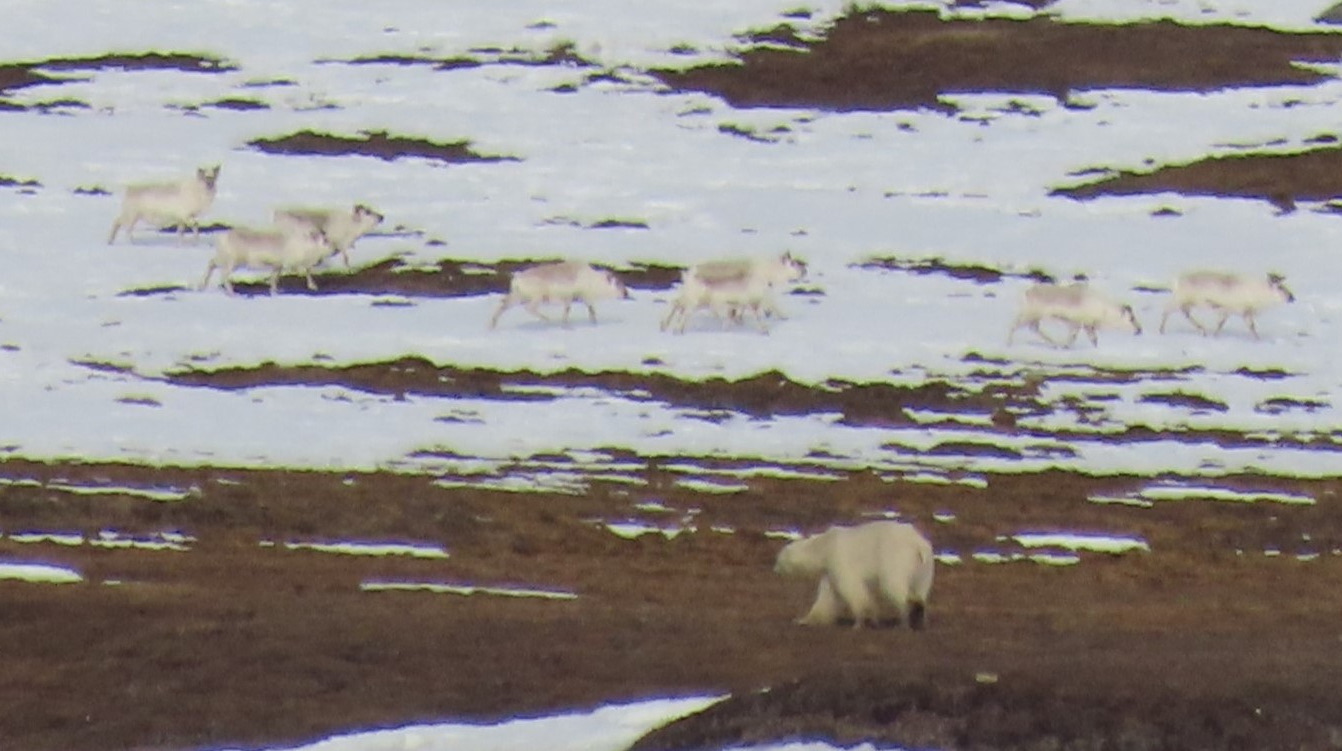
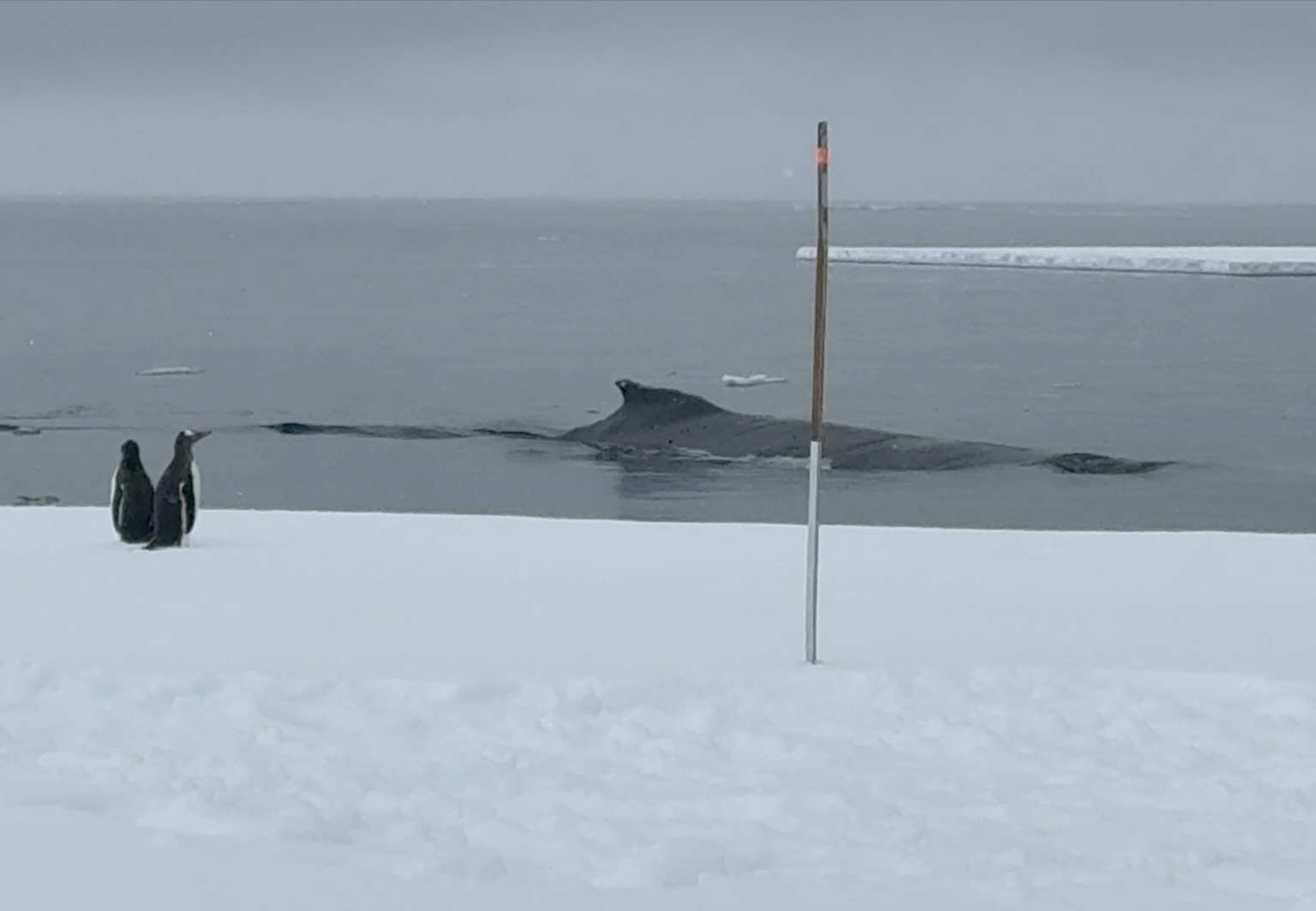
My husband, the homebody, often asks: why not just go to the zoo? My response: zoos are not natural habitats. In a zoo, you would not see a polar bear sliding down snowy hills, hovering for hours by a hole in the ice awaiting a seal to emerge, or catching a reindeer for a snack (a recent change in behavior due to shrinking ice and access to seals). In a zoo, you would not have penguins waddling past you (even as you attempt to back away the prerequisite 5-meters), hopping on and off icebergs, or stealing nesting rocks. And you would never see humpback whales. Period. (A few zoo/aquariums have belugas or orcas.)
Edge goes to: Antarctica, by a mile
"That was freaking amazing" moments
In a nutshell: Expedition ships will often include kayaking and hiking amid incredible landscapes and possibly close to wildlife such as seals, penguins and whales (but not polar bears or walruses).
In Antarctica, you’ll likely walk on the peninsula portion of the 7th continent and claim bragging rights. This tends to be the major draw for many passengers.
In the Arctic, you’ll likely sail toward the Arctic pack ice at the top of the world. Just hundreds of miles from the North Pole, you'll feel like true explorers.
Edge goes to: Antarctica
Fitness required
In a nutshell: You are going to the most remote places on Earth. So you need to be healthy enough not to worry about access to a hospital or sophisticated emergency care.
To go cruising or ashore for both the Arctic and Antarctica, you’ll need to get in and out of rubbery rafts bobbing in water, and step into two feet of water for landings. On land or fast ice (sea ice that’s attached to land and thus more stable), there may be walks on slippery snow or rocky terrain or more intense hikes. If you want to kayak, you'll "test" to see if you can get in and out of Zodiacs into the kayak. Always, there will be many helping hands.
The level of activity will vary based on the company/ship you choose. Quark's hikes were split among self-selected groups ranging from "contemplative" to "chargers." Like any cruise, you can enjoy yourself just staying aboard. But better to enhance your fitness enough to fully experience these unique adventures.
Edge goes to: it’s a tie
History and culture
In a nutshell: Both regions have long fascinated adventurers. Because the Arctic is surrounded by eight countries, it's been inhabited for tens of thousands of years. The first landing in Antarctica wasn't until 1821.
Nearly four million people live in the Arctic, including some 400,000 indigenous peoples such as the Saami in Scandinavia, and the Inuit in Alaska, Greenland and Canada. Some of their ancestors came 15,000-20,000 years ago from Asia. In Antarctica, there are no natives or towns. About 4,000 people work in 40 year-round research bases during the summer; about 1,000 stay through the bitter winter.
Interesting side note on the poles:
It's commonly believed that American Robert Peary reached the North Pole on April 6, 1909. His achievement was long disputed partly because fellow American Frederick Cook claimed he had made it there a full year earlier. In 1989, a report commissioned by the U.S. National Geographic Society concluded Peary was indeed within 4-5 miles of the North Pole. (Because it is in the Arctic Ocean, not on land, the North Pole's exact location shifts and can't be precisely pinned down.)
Norwegian explorer Roald Amundsen was headed north when he heard about Peary and Cook. So he went south instead, and was the first to reach the South Pole on Dec. 14, 1911.
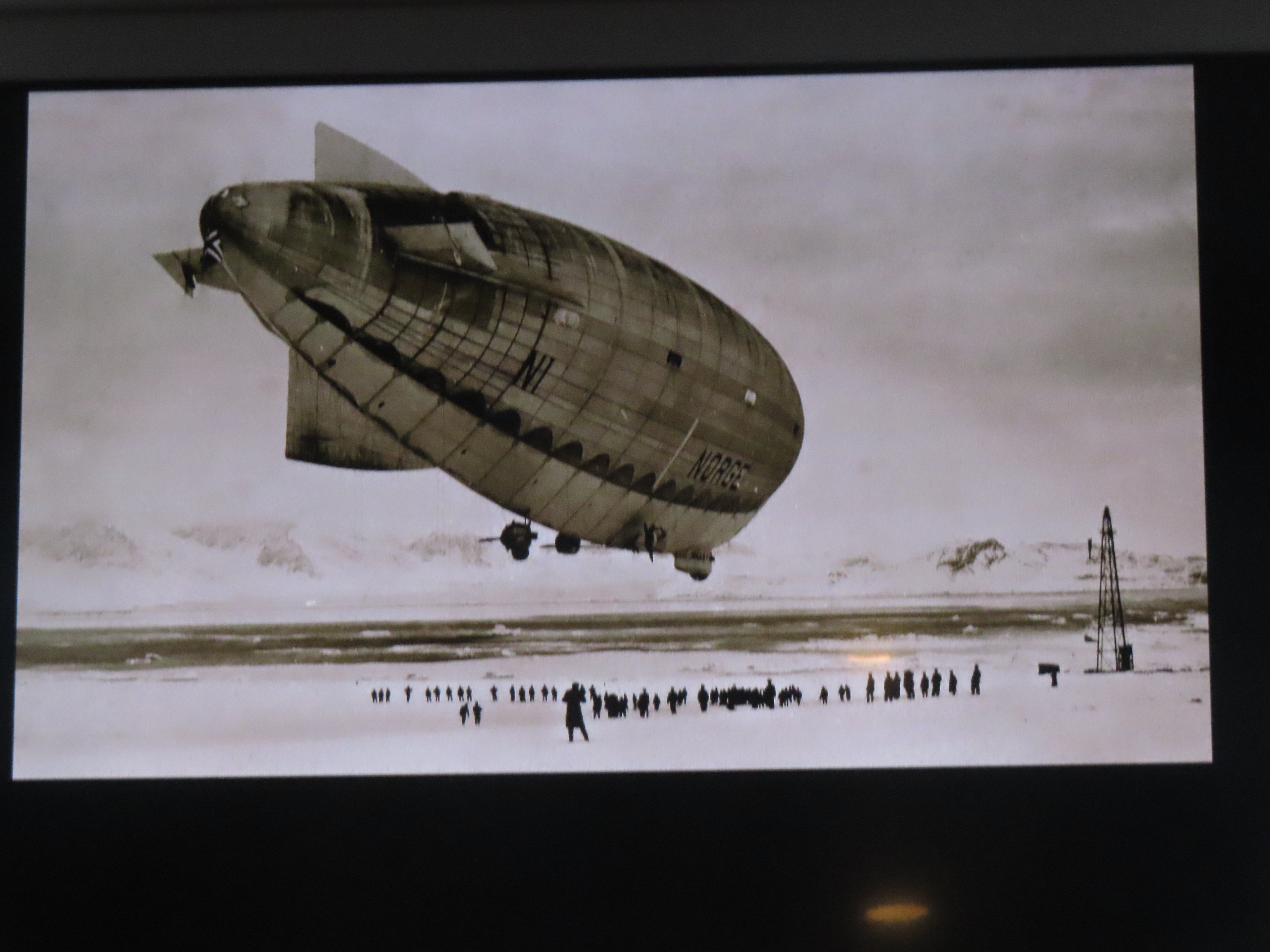
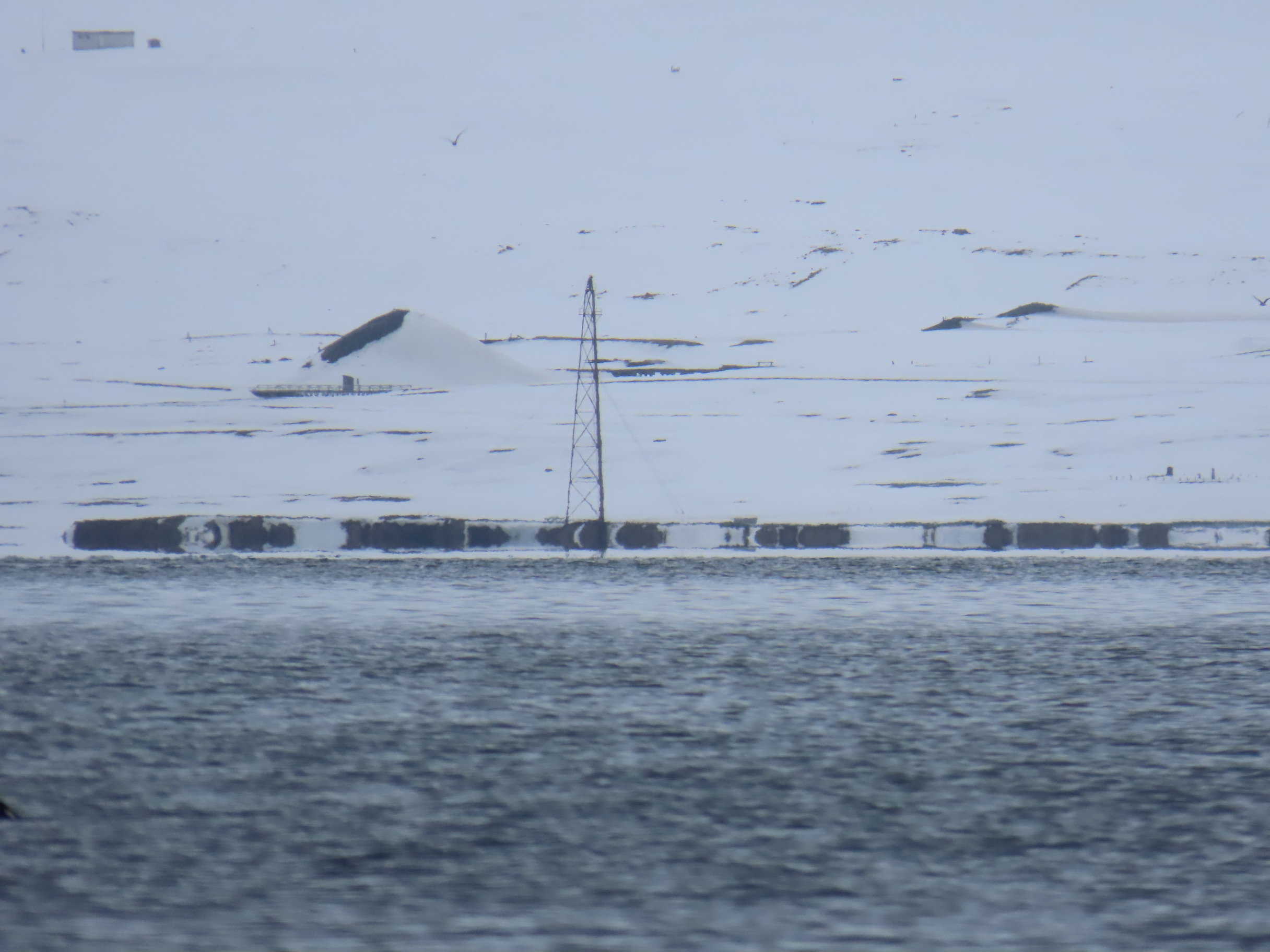
But Amundsen continued to be drawn north, and attempted by ship and plane to reach the North Pole. On May 12, 1926, he successfully flew 200 meters (or 656 feet) above the North Pole in the dirigible Norge. The mooring mast still stands at Ny-Ålesund in Svalbard, from where he departed.
(Richard Byrd's claim of flying over the North Pole three days before Amundsen remains disputed--research indicates he was likely 80 miles off. )
While Peary was just miles from the North Pole in 1909, Amundsen was actually closer, though above it. That gives Amundsen the distinction of being the first to reach both the South and North Poles.
Edge goes to: the Arctic
What else is there to do?
In a nutshell: Since you’re already there, you can check out more of South America or Norway.
When you go to the Antarctic, you can sightsee in Buenos Aires and Ushuaia (with easy trips to Tierra del Fuego), and take a few days to visit Iguazu Falls or Patagonia. Some also go to Machu Picchu although I think that’s a completely separate trip.
When you go to Svalbard, you can enjoy adventure activities such as dogsledding and snowmobiling earlier in the season (which was so much fun!); and easily visit Norway’s spectacular northern areas of Tromso, Senja and the Lofoten islands, which we also loved.
For both, you’ll have the midnight sun nearly 24 hours a day in the summer, so 1. You will not see the northern lights and 2. You likely will have a hard time sleeping!
Edge goes to: the Arctic
So what's the verdict?
Searching and finding tiny polar bears in the distance was exhilarating but exhausting. If you long to see the bears, be prepared for only long-distance viewing in Svalbard, and make that excursion only part of your visit to Norway. (Of note: we're headed to Churchill, Canada, in July, 2025 for what we expect to be far more intimate polar bear encounters!)
The edge goes to: the Antarctic. The breathtaking vistas and vibrant wildlife gave me such joy, I had a ridiculous grin nearly the whole journey. I can't wait to return.
As a Fora travel advisor, I would love to get you on a polar expedition! Click here to connect!
Interested in more? Check out our Antarctic photo highlights, or our Arctic photo highlights.
Comments
Be the first to comment.
Leave a comment